
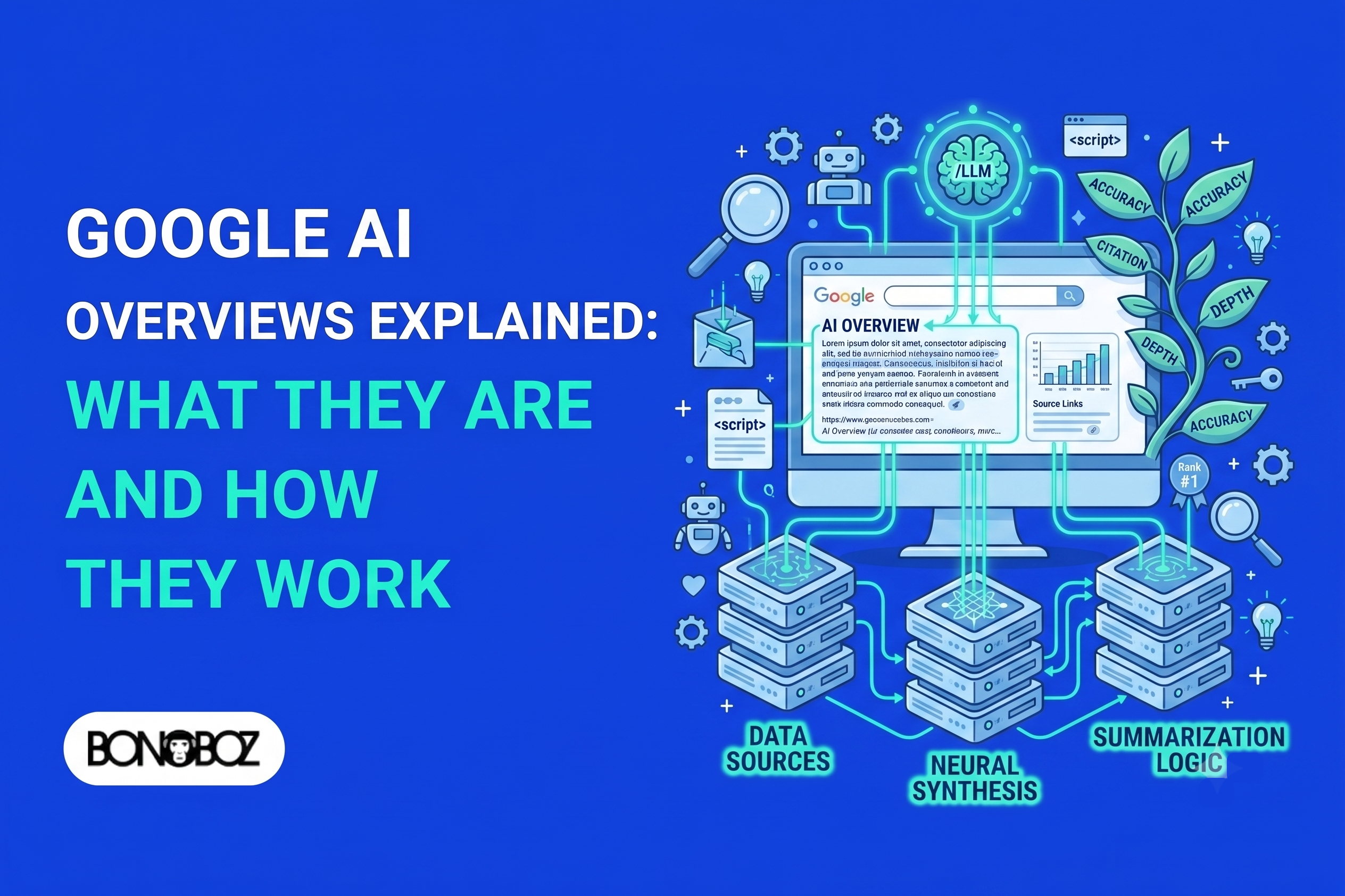
If you have searched for anything on Google recently from India, you have probably noticed a box at the top summarizing the answer. This is an AI Overview. Google is trying to answer questions directly on the search page so users do not have to click through multiple websites to find information.
For business owners and marketing managers, this change feels like another moving target. After years of investing in traditional search optimization, seeing an automated summary take up the most valuable space on the screen can be frustrating. Understanding how this feature works is the first step toward managing its impact on your digital presence.
Key Takeaways
- Direct Answers: Google uses large language models to compile direct summaries at the very top of the search results page.
- Fewer Clicks: The primary goal is to save user time, which means informational queries may no longer result in a website visit.
- Information Aggregation: The system relies on Google’s existing index to pull data from multiple web sources simultaneously.
- Live in India: This feature is fully rolled out in India across English and Hindi searches, changing daily user behavior.
- Strategic Shift: Adapting to this shift requires moving away from shallow content and focusing on deep, verifiable authority.
Understanding the Basics of Google AI Overview
We need to look past the marketing hype around artificial intelligence and look at what has actually changed on the search engine results page. Google is transitioning from a system that points people to answers toward a system that attempts to speak the answer itself.
Defining the AI-Powered Search Experience
An AI overview is a multi-paragraph summary generated at the top of a search results page for complex queries. Instead of forcing a user to click three different links to compare facts, the algorithm attempts to read those pages for the user and present a consolidated answer.
From a user perspective, it simplifies research. From a business perspective, it creates a layer between your website and your potential audience. It means visibility is no longer just about ranking first; it is about being the source that the AI trusts enough to quote.
Why Google Introduced AI-Generated Summaries
Google’s business model relies on keeping users engaged on their platform while serving relevant advertisements. Traditional search queries often required users to dig through poorly written, repetitive blogs to find a simple answer.
By introducing AI-generated summaries, Google is trying to cut down on search friction. They want to give users immediate answers to save them time, which raises the bar for what kind of content actually deserves a click.
Availability and Regional Rollout in India
This feature is not an experimental beta anymore; it is live across India. Because the Indian market relies heavily on mobile search and voice queries, Google has optimized these overviews to handle mixed-language queries (such as Hinglish) and local context.
As a business operating here, ignoring this update means missing how your customers actually browse the web today. Staying informed about how these rollouts evolve helps you protect your existing search footprint.
How Google AI Overviews Work Behind the Scenes?
The interface looks clean and simple, but the process behind it is a massive data-processing operation. Google is not writing these responses from scratch based on its own opinions; it is processing the collective information available on the live web.
The Role of Large Language Models in Search
The core technology behind this shift relies on Large Language Models (LLMs) tuned specifically for search accuracy. Unlike traditional search systems that look for exact keyword matches, these models are trained to understand how words relate to each other in full sentences.
Instead of just retrieving a list of URLs that contain your keywords, the model reads the text on those pages, checks for patterns, and rewrites the core information into a shorter, readable paragraph.
“The challenge for modern search engines is no longer index size, but context synthesis. The system must understand what the user wants to accomplish and assemble a reliable answer from separate fragments across the web.”
Processing Search Queries and Intent
When someone types a query into Google, the system categorizes the intent. Is the user trying to buy something, find a specific website, or learn how to solve a problem?
AI overviews are generally triggered for informational and research-heavy queries. The system filters out low-quality filler text on the web and highlights high-quality, factual data points that answer the user’s specific question directly.
How the Google Algorithm Selects Information
The selection process relies on the same core principles that have governed search for years: authority, relevance, and reliability. Google’s algorithm evaluates which websites have a proven track record on a topic before using their data in an AI overview.
To prevent the AI from sharing incorrect information, the system uses multiple verification steps. It favors websites that provide clear data, transparent authorship, and verifiable facts. If your website is known for accurate insights, its chances of being cited increase.
Step-by-Step Guide to Using AI-Powered Search in India
Using search effectively now requires understanding how to interact with this automated layer. It changes the way we research, cross-reference facts, and discover new services.
Accessing AI Mode on Desktop and Mobile
You do not need to install a special app or toggle hidden settings to see these updates. The AI overviews appear automatically within the standard Google search app on Android and iOS, as well as on desktop browsers.
When you look up a multi-layered question, the overview box expands naturally at the top. Traditional organic listings are pushed below this fold, making the overview the first point of interaction.
Formulating Effective Queries for Better Results
Because the underlying system understands natural language, keyword stuffing no longer works for users or creators. Conversational queries yield much cleaner overviews.
- Vague approach: “Digital marketing budget”
- Effective approach: “What percentage of revenue do Indian manufacturing SMEs typically spend on digital marketing?”
Specific questions give the algorithm the context it needs to find exact, data-driven sources instead of generic definitions.
Interpreting AI-Generated Summaries for Daily Tasks
When using these summaries for quick reference, it helps to understand where they fit best. They are highly effective for initial research but should not be treated as final legal or financial advice.
| Search Method | Primary Benefit | Best Use Case |
| Traditional Search | Direct access to specific corporate or brand websites. | Navigational queries (e.g., login pages, brand names). |
| AI-Powered Search | Consolidated summaries from multiple distinct pages. | Complex research tasks and comparative overviews. |
| Follow-up Mode | Ability to narrow down details without losing initial context. | Deep-dive investigations and multi-step problem solving. |
Refining Results Through Follow-up Questions
If the initial overview leaves out a specific detail, you can use the conversational follow-up option below the text block. This allows you to dig deeper into a topic without needing to type a brand-new search query from scratch.
Verifying Information via Cited Sources
Every AI overview includes links to the websites used to build the summary. As a rule of thumb, you should click through to these cited links whenever you are dealing with critical business, health, or financial decisions to confirm the source data hasn’t been misconstrued.
Distinguishing Between Traditional Search and AI Summaries
There is a clear line between the classic list of ten blue links and the new generative search summaries. Understanding this difference helps businesses set realistic expectations for their organic traffic performance.
The Evolution of Featured Snippets vs. AI Overviews
Featured snippets have been around for years. They simply pull a single, relevant paragraph from a single website and display it word-for-word.
AI overviews are far more complex. Instead of quoting one site, they read five or ten different pages, compare the points, and write an entirely new narrative that balances those perspectives.
When Google Decides to Show AI Overviews
The algorithm does not trigger an AI response for every single query. For simple navigational searches (like searching for a specific brand’s portal) or local queries (like finding a mechanic near you), Google still prioritizes standard links and map packs for immediate accuracy.
Impact of Generative AI on Search Engine Results Pages
The layout of the search engine results page (SERP) is changing, and this shift has real consequences for business owners who rely on organic web traffic to generate leads.
Shifting User Behavior in the Search Landscape
As users grow accustomed to getting answers instantly, their browsing habits are changing. This shifts expectations across the digital ecosystem.
- Zero-click searches: An increasing preference for instant answers without visiting third-party sites.
- Streamlined research: A reduced need for multi-step clicking during early informational research stages.
- Higher expectations: A lower tolerance for websites that hide basic facts behind dense blocks of text.
How AI Overviews Affect Website Traffic
Let’s be direct: informational blogs that exist just to define simple terms will likely see a drop in organic search rankings and website traffic. If your article is just answering “What is a payroll system?”, Google’s AI will answer it on the SERP, and the user won’t click your link.
However, for businesses that produce deep, original case studies, proprietary data, or unique expert opinions, this is an opportunity. When the AI cites your website as the definitive source for a complex point, the traffic you do get will be highly qualified and genuinely interested in your expertise.
The Relationship Between Google Ads and AI Summaries
Google is a business built on advertising revenue. Google Ads have already begun appearing inside and alongside AI overviews. Sponsored placements remain a primary way for brands to guarantee visibility above or within the automated summary sections.
Navigating Citations and Sources Within AI Overviews
Citations are the bridge between automated summaries and the human creators who produced the underlying data. Google uses them to maintain credibility and avoid legal complications regarding copyright.
How Google Selects Websites for Citations
The selection process targets pages that offer deep topical authority. The algorithm looks for clear writing, structured formatting, and clean data points that directly match the user’s core question. It actively filters out repetitive content that lacks primary value.
The Importance of Trust and Authority in AI Search
Trust is the currency of modern search engine optimization. Websites with clear editorial standards, verified author profiles, and clean citations of their own are far more likely to be picked up by the generative models.
“Transparency in AI-generated content is not just a regulatory feature; it is a necessity for maintaining user trust in the digital ecosystem.”
When your site is featured in an overview, it serves as a validation of your authority on that subject. The table below illustrates how the search architecture treats different types of information sources:
Evaluating the Reliability of AI-Generated Answers
As an industry practitioner, my advice to clients is always to double-check the automated summaries. Because these models look for patterns rather than true logical understanding, they can still occasionally misinterpret nuanced industry data. Always look at the cited websites to ensure the context matches your needs.
Best Practices to Optimize Your Content for AI
If you are working with an agency that promises to “hack” the AI overview system, be cautious. There are no shortcuts here. The way to optimize for AI search is to write content that is genuinely useful for human experts.
Focusing on High-Quality and Authoritative Content
Stop producing high-volume, low-effort blog posts designed solely to capture keywords. Instead, focus on creating deep resources based on your actual business experience. Share real case studies, unique project data, and clear, step-by-step solutions to your clients’ actual problems. The more specific and authoritative your content is, the harder it is for an AI to replace it without citing you.
Structuring Data for Better Machine Readability
While your content must be written for humans, your technical setup must be clean for machines. Use proper heading hierarchies (H2, H3) and implement structured data schema markup. This helps the search engine crawl your site efficiently and pull precise snippets for its summaries.
Balancing SEO for Traditional Search and AI Tools
Do not abandon classic SEO Services. Traditional search optimization, technical site speed, and mobile responsiveness still form the foundation of how Google evaluates your brand. Your digital strategy should look at AI optimization as an extension of good, fundamental search optimization, not a replacement for it.
Limitations and Future Outlook of Google AI Mode
Generative search is a work in progress. Understanding its current boundaries helps you navigate its behavior without buying into unrealistic software promises.
Addressing Accuracy and Hallucinations in AI
AI systems operate on probability, not certain logic. This means they can still experience hallucinations—generating statements that sound confident but are factually incorrect.
- Probabilistic outputs: AI models estimate words based on patterns, which can occasionally lead to errors in complex contexts.
- Verification needed: Comparing outputs against original primary sources remains an absolute necessity.
- Support tool: The feature is built to assist with broad research, not replace human judgment.
Ongoing Updates to the Google Algorithm
Google modifies its core algorithm continuously to address these accuracy issues. They are actively refining how the system weights authoritative sources to reduce the risk of showing incorrect or low-quality summaries to users.
What Users Can Expect from Future AI Features
The search experience will continue to lean into multimodal capabilities, blending text, voice images, and video into unified overviews. As these tools evolve, the brands that maintain clear, undeniable authority in their physical and digital operations will remain the ones that search engines depend on for reliable answers.
A Grounded Takeaway
AI Overviews are not the death of organic marketing, nor are they a magical shortcut to instant growth. They are simply a shift in how information is organized. To keep your brand visible, stop chasing vanity traffic metrics through generic content. Focus instead on building a website that serves as a definitive, high-authority resource for your specific industry. When you write content that genuine experts respect, search engines will continue to follow.
FAQs
1. What exactly are Google AI Overviews and how do they change the search experience?
They are automated summaries displayed at the very top of the Google search results page. They combine data from multiple websites to give users a quick answer, reducing the immediate need to click through to individual links for simple questions.
2. How do Google AI overviews work behind the scenes?
When a user searches for a complex topic, Google’s large language models analyze the intent, scan the top ranked pages in their index, extract the core details, and synthesize them into a short summary with citations.
3. Are Google AI overviews currently available in India?
Yes, they are live across India for both mobile and desktop searches, supporting queries in English, Hindi, and regional language variations.
4. What is the difference between AI Overviews and the Google AI Mode?
AI Overviews are the static paragraphs that appear directly in your main search results. AI Mode refers to the interactive, conversational assistant feature where you can engage in a back-and-forth dialogue to refine your search.
5. How can I optimize my content for AI overviews and improve my AI SEO?
Focus on deep, authoritative content that answers specific, long-tail questions. Ensure your site uses clean technical formatting, proper heading structures, and schema markup so the algorithm can easily parse your data.
6. Will Google AI overviews affect my website traffic and organic search rankings?
Yes. Simple informational keywords will likely see a reduction in click-through rates because users get their answers on the SERP. However, deep transactional and highly specific search queries will continue to drive valuable, high-intent traffic to authoritative sites.
7. How do AI overviews differ from featured snippets?
Featured snippets extract a single block of text from one specific webpage. AI overviews read multiple independent web sources and write a combined overview using natural language processing.
8. Are the answers provided by the AI system always reliable?
Not entirely. While Google filters for authority, these models can still occasionally misinterpret data or hallucinate facts. Critical business, legal, or medical data should always be cross-checked with the cited link sources.
9. How does the presence of Google Ads interact with AI-powered search?
Google integrates sponsored ads directly above, below, or inside the AI overview boxes to maintain their advertising business model, ensuring paid visibility remains accessible.
10. Can I turn off the Google AI overview feature?
There is no global user switch to completely disable AI overviews within standard Google search settings, as it is a permanent update to the core search infrastructure.
Related Articles:
- AI Rank Tracking Tools Compared: Features, Benefits, and Practical Choices for Growing Brands
- The Evolving Digital Marketing Era: Exploring its Role with Artificial Intelligence
